Page 6 of 11

Marvel Announces Deadpool Videogame

A veritable plethora of exciting news came out of this year’s San Diego Comic Con, but this little nugget just might be my favorite: Marvel is teaming up with developer High Moon Studios and publisher Activision to produce a videogame for the most self-aware and sarcastic anti-hero around, Deadpool, the Merc with a Mouth. A trailer, seen above, was released last week.

For those that have only seen the character in “X-Men Origins: Wolverine,” do your best to wipe what knowledge you think you have of him from your collective memories. Just know this: Deadpool is a disfigured and certifiably insane mercenary who’s great at using every weapon imaginable and better at being  sarcastic prick. In his comics, the Merc often breaks the fourth wall for humorous effect, and it makes him one of the most entertaining characters out there.

Deadpool has appeared in games before, he’s a playable character in Marvel vs. Capcom 3 and we got to beat up on him in Spider-Man: Shattered Dimensions, but this is the first time he’ll be in the spotlight. Nolan North, who voiced him in the aforementioned games will be returning to the character. Little did you know, you’re likely already familiar with North’s work, he’s Desmond Miles in the Assassin’s Creed games as well as Nathan Drake from the Uncharted series.

Little else is known about the game so far, Marvel has yet to announce a genre, release date or which platforms it will be available on. We can only hope that High Moon (best known as the makers of the last three Transformers games) will stay true to the character, meaning the game will be rated M. Based on the trailer, that seems to be the case, and it’ll be chock full of violence, swearing, and of course, Deadpool’s trademark wit.

Follow the writer on Twitter @NateKreichman.

As I Go Along: The Sandman #6 ‘Fables and Reflections’

Note: “As I Go Along” is a new feature in which I review and discuss the best graphic novels and series that I haven’t yet had a chance to read. These are the titles your comic-loving friends have been trying to push into your hands for years, only now I’ll be doing the pushing (or telling you not to bother). The post will include spoilers for those who have not yet read the work.

“Dreams are composed of many things, my son. Of images and hopes, of fears and memories. Memories of the past, and memories of the future…”

Much like the third “Sandman” collection, “Dream Country,” “Fables and Reflections” is a collection of one-issue short stories. Most of these tales don’t contribute to the series’ major story arc other than to provide background and subtext, the exception being the collection’s middle story, “The Song of Orpheus.”

Aside from “Orpheus,” the stories in “Fables and Reflections” are divided into two groups (thematically, not in the paperback). The first group is labelled “Convergences.” Each of these issues is structured as a story within a story and explores the relationships between story and storyteller, which are often convergent, get it? The second is “Distant Mirrors,” which focuses on rulers, or more specifically, emperors, and the nature of power. I spent a whole lot of time on Wikipedia reading about his Imperial Majesty Emperor Norton IMaximilien Robespierre and Saint-Just,Augustus Caesar, and  Hārūn al-Rashīd after reading these stories. Gaiman will do that, get you interested in things you’d otherwise never give a second glance.

The four “Distant Mirrors” stories show Dream (and sometimes his relatives) influencing those rulers and their actions. Everything ends up the same way we learned in history class, but in this universe the things in the middle happened a bit differently. It turns out failed businessman Joshua Abraham Norton didn’t just go mad and name himself Emperor of the United States. In fact, it all happened because Despair challenges Dream to keep Norton in his realm for the rest of his life. Rather than let Norton wallow in his pity and fall into his sister’s control, Dream allows him to believe he’s in charge. Normally, such insanity would mean the “Emperor” would be Delirium’s property, but as she points out in one of the most poignant lines I’ve ever read in a comic book (or anywhere, really), “His madness keeps him sane.”

There’s no time to talk about all the stories, so instead I’ll focus on “Thermidor,” which, along with being  my favorite, and serves as something of an introduction to “The Song of Orpheus.” Dream charges the Lady Johanna Constantine, who first appeared in “Men of Good Fortune,” with the task of removing his son’s (body free but nonetheless immortal) head from France. The leaders of the revolution seek to destroy it because they are “remaking the world… creating an age of pure reason,” and such an “object of superstition” has no place in their new “utopia.”

“Thermidor” is far and away the most political entry of the “Sandman” series thus far. Gaiman’s scathing critique of those who oversaw the “Reign of Terror” is clear. He mocks these Robespierre and Saint-Just, who had tens of thousands killed, “lost the saints and burnt the churches” in the name of reason. The juxtaposition is quite obvious: they’re seeking to destroy a single head in the name of logic as a guillotine, irrationality incarnate, sits outside the window.

Anyhow, onward to “The Song of Orpheus,” a double-issue in which we finally get the backstory of Dream’s oft-mentioned but never shown progeny, up to and including just how he ended up as an immortal head without a body. Behind the classic Greek myth of Orpheus, Gaiman layers his own characters and their motivations. In the “Sandman” version of the tale, Orpheus is the son of Dream and Calliope, the muse who you’ll recall was set free by her former lover back in “Dream Country.”

The story begins with Orpheus’s wedding to Eurydice. Following the mythology, the young bride dies and Orpheus sets out to the underworld to take her back. After singing a song, Hades tells him (more or less), “sure your wife will be resurrected and you’ll both be allowed to leave the underworld on one condition: don’t look back.” Orpheus looks back, of course, because if he didn’t there would be no conflict and thus, no story.

The most important part of the story, perhaps, is the way it displays Dream’s coldness at this point in time. When his own son, whose bride has just died on the day they were to be wedded up and dies, pleads for his help, Dream flat out refuses him. Now, the Dream we’ve come to know still might not have helped, but he may at least have thought it over for a second or two. Dream has changed, and one of the best ways of displaying that is showing us a “before” picture. His growth and development will be an area of interest in the next collection, “Brief Lives,” as well.
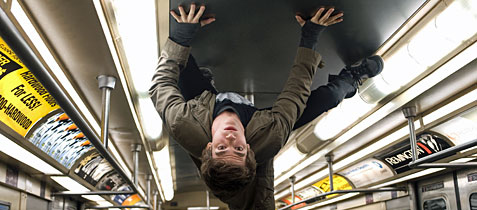
Good reviews for ‘The Amazing Spider-Man’

The reviews are in for “The Amazing Spider-Man” and they are pretty good. Bullz-Eye.com’s Jason Zingale liked it, and the critic ratings on Rotten Tomatoes are solid, with excellent audience ratings.

Here’s what Jason had to say:

There has been a lot of criticism regarding Sony’s decision to reboot the Spider-Man franchise only a decade after the first film was released, and although it may seem silly to start from square one again after Sam Raimi did such a good job establishing the web-slinger’s cinematic universe, it was time for a change. As great as Raimi’s trilogy was (and for the record, I’m one of the few people who will actually admit to liking the third installment), rebooting the series has allowed director Marc Webb, who’s just as much of an inspired but risky choice as Jon Favreau was for “Iron Man,” to take Marvel’s popular superhero in an exciting new direction.

Check out the rest of his review in the link above.

As I Go Along: The Sandman #5 ‘A Game of You’

Note: “As I Go Along” is a weekly feature in which I review and discuss the best graphic novels and series that I haven’t yet had a chance to read. These are the titles your comic-loving friends have been trying to push into your hands for years, only now I’ll be doing the pushing (or telling you not to bother). The post will include spoilers for those who have not yet read the work.

“Everybody has a secret world inside of them. I mean everybody. All of the people in the whole world, I mean everybody — no matter how dull and boring they are on the outside. Inside them they’ve all got unimaginable, magnificent, wonderful, stupid, amazing worlds… Not just one world. Hundreds of them. Thousands, maybe.”

In the fifth “Sandman” collection, Dream once again took a backseat, watching the stories’ events from afar, only intervening at the end. Once again, Gaiman takes a tiny thread from an earlier work and weaves it into an beautiful and intricate quilt.  “A Game of You” is centered around Barbie, who we first met as a resident of the same house as Rose Walker in “The Doll’s House.” At the time, she was married to a man named Ken (imagine that), but they’ve divorced, and Barbie’s moved to big, bad New York City, where she lives with many of the interesting cast of characters who make up the story. But more has changed than Barbie’s marital status and place of residence. Chief among these changes: she no longer dreams.

From the outset, it appears this is a story about Barbie’s dreams returning, and as a result, her return to The Land as Princess Barbara, and eventually the skerry’s demise. “A Game of You” is that story, but more so it is a tale, as the title implies, about the question of identity. The reader must consider who and what each character in the collection is, as the characters do themselves.

Barbie, of course, is two different people, depending on whether she is awake or asleep. In the real world, she is a New York tenement dweller struggling to find her way in life following her divorce. No one depends on her but herself, and she is having a hard time keeping even that much responsibility in line. Yet in her dreams Barbie is quite the opposite. She is a princess on a magical quest to save the known world. Everyone and everything needs and depends on her.

Each of the characters has their own “game.” Wanda is a pre-operative transexual, born Alvin Mann in what she’d likely think of as a previous life. However, Wanda is scared of surgery, or perhaps just one surgery in particular, that which would make her a woman in body as well as mind. Throughout the story, Wanda struggles with her gender, and the question of her identity, or “game of Wanda” ends with her being buried in the Midwest by her traditional, God-fearing parents, who refuse to acknowledge the existence of their “son’s” other life, shunning all mention or hints to it. Or does it? Barbie dreams of Death whispering in Wanda’s ear, only she’s in the “perfect female body.” Whatever Death whispers, it makes Wanda smile.

While this volume was missing perhaps my favorite part of the “Sandman” series: the growth and development of the immortal Dream, “A Game of You” offered up some great elements of its own to separate it from previous collections. Most notably, the pacing of the plot and its various cliffhanger endings. While every “Sandman” book begs the turn of the page and “just one issue more before bed” turning into 3, I don’t know if any of the others has made me so desperate to find out what happens next in terms of plot. Furthermore, although it seems like it’d be difficult to expand the series’ mythology when Dream’s not really around, we did learn about the “distant skerries of dream,” places like The Land, where some people return every night, as well as further proof of Dream’s power, albeit indirectly. When Thessaly brings Hazel and Foxglove into the Dreaming, she does so with witchcraft that moves the moon and has dire consequences on Earth: changing the tides and bringing an apocalyptic hurricane into New York City. Clearly, the Dreaming and “reality” are not so separate as they appear.

« Older posts Newer posts »